— Who It's For
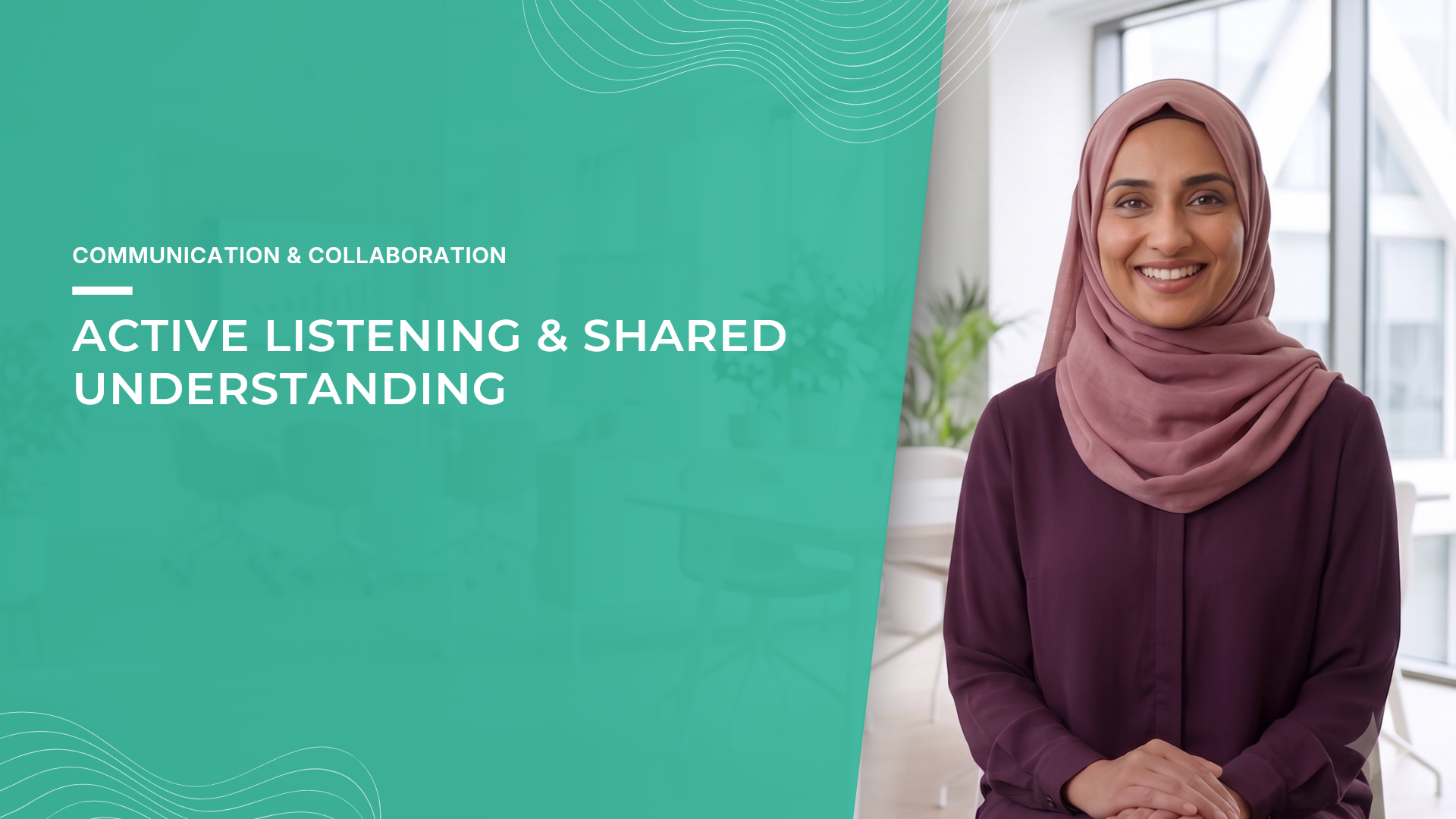
Active listening & shared understanding
Have you ever walked away from a conversation thinking you were aligned, only to realize later that you and the other person meant different things? Small misunderstandings can quickly grow when you reply to what you predict someone is saying instead of what they actually mean. That kind of friction can slow down your work, create unnecessary tension, and make collaboration feel more difficult than it needs to be. In this course, you'll learn why small misunderstandings become bigger, how prediction gets in the way of listening, one simple move to improve understanding, and what better shared understanding looks like in practice.
Interactive Video
Practical Resources

Skill Practice
Certificate of Completion
— Why This Course
Benefits of Our Training
Designed by working professionals for aspiring professionals.

Understand More Clearly
Learn how small misunderstandings begin and why conversations can go off track even when both people think they are aligned.

Listen Without Predicting
Discover how assumptions and predictions can interfere with listening, and learn a simple way to stay focused on what someone actually means.

Build Shared Understanding
Use practical listening techniques to create clearer conversations, reduce friction, and develop stronger understanding with others.
— What You'll Learn
Course Curriculum
15 Years of Experience
Learners
Assignments
Hours

— Your Instructor
The Experience Behind the Course
This course is built around practical communication challenges that happen in real conversations. The focus is on helping people recognise misunderstandings, listen beyond assumptions, and create clearer shared understanding.
From workplace conversations to everyday interactions, the approach is simple: listen carefully, check what is actually meant, and create space for better understanding.
— Testimonials
What Readers Are Saying
Real reviews. Real people. Real impact.

— Questions
Before you write.
A few things people ask most often.
What will I learn in this course?
You'll learn why misunderstandings grow, how prediction can interfere with listening, and a simple approach for creating better shared understanding.
Who is this course for?
It is designed for anyone who wants to communicate more clearly, listen more effectively, and reduce unnecessary misunderstanding in conversations.
Is the course practical?
Yes. The course focuses on practical ideas and examples that you can apply directly to real conversations and everyday interactions.
How can active listening improve communication?
Active listening helps you focus on what another person actually means rather than responding to what you expect them to say, creating clearer and more productive conversations.

Practical systems for modern life, performance, and wellbeing. Books, courses, and corporate programmes built from three decades of real leadership and delivery experience.