
— Who It's For
Coping with workplace change
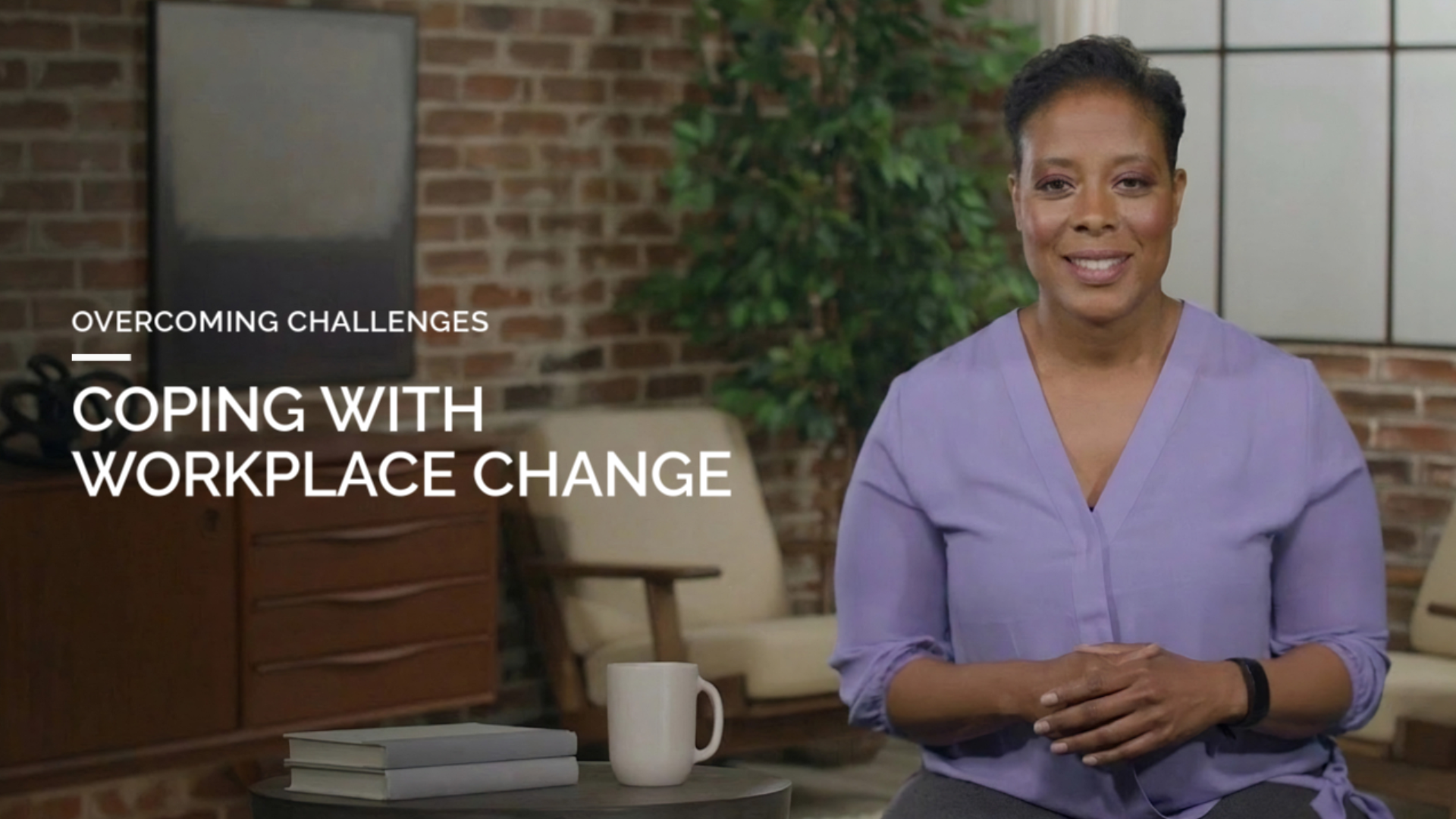
Change takes many shapes in the workplace. You might face project changes, shifting organizational goals, and job or team restructuring—to name a few. Regardless of what the change is, how does it make you feel? Excited? Anxious? Skeptical? Most people feel at least a little unsettled by change. Change disrupts the status quo and forces us to try new things. Sometimes, we also have to navigate changes we don’t like or agree with—which can leave us feeling powerless, sad, or angry. So, how can you make the transition as smooth as possible? In this course, you’ll explore five common reactions to change and identify your emotions. From there, you’ll learn four strategies to embrace change, roll with the punches, and focus on the things within your control. While you can’t always predict or prevent change, you can manage your response.
Interactive Video
Practical Resources

Skill Practice
Certificate of Completion
— Why This Course
Benefits of Our Training
Designed by working professionals for aspiring professionals.

Understand Your Reactions
Recognise common reactions to workplace change and identify the emotions that can shape how you respond to unfamiliar situations.

Focus on What You Can Control
Learn how to shift your attention away from what you cannot change and towards the actions and choices that remain within your control.

Adapt With Greater Confidence
Use practical strategies to embrace change, handle disruption, and move forward even when the outcome is uncertain.
— What You'll Learn
Course Curriculum
15 Years of Experience
Learners
Assignments
Hours

— Your Instructor
The Experience Behind the Course
This course is built around a reality of modern work: change can disrupt familiar routines, challenge expectations, and create uncertainty about what comes next.
The approach focuses on understanding your response to change, recognising what is within your control, and developing practical ways to move through workplace transitions with greater confidence.
— Testimonials
What Readers Are Saying
Real reviews. Real people. Real impact.

— Questions
Before you write.
A few things people ask most often.
Why does workplace change feel unsettling?
Change disrupts familiar routines and can create uncertainty. It is natural to experience emotions such as anxiety, frustration, excitement, or scepticism when things change.
What are some common reactions to change?
People can respond to change in different ways, including feeling anxious, resistant, uncertain, frustrated, or even excited about new possibilities.
How can I manage emotions during workplace change?
Start by recognising what you are feeling rather than ignoring it. Understanding your reaction can help you choose a more deliberate response.
What can I control when things are changing?
You may not be able to control the change itself, but you can control how you respond, where you focus your attention, and what actions you take next.
How can I adapt when I do not agree with a change?
You do not have to agree with every change to respond constructively. Focus on what is within your control and look for practical ways to move forward.

Practical systems for modern life, performance, and wellbeing. Books, courses, and corporate programmes built from three decades of real leadership and delivery experience.