— Who It's For
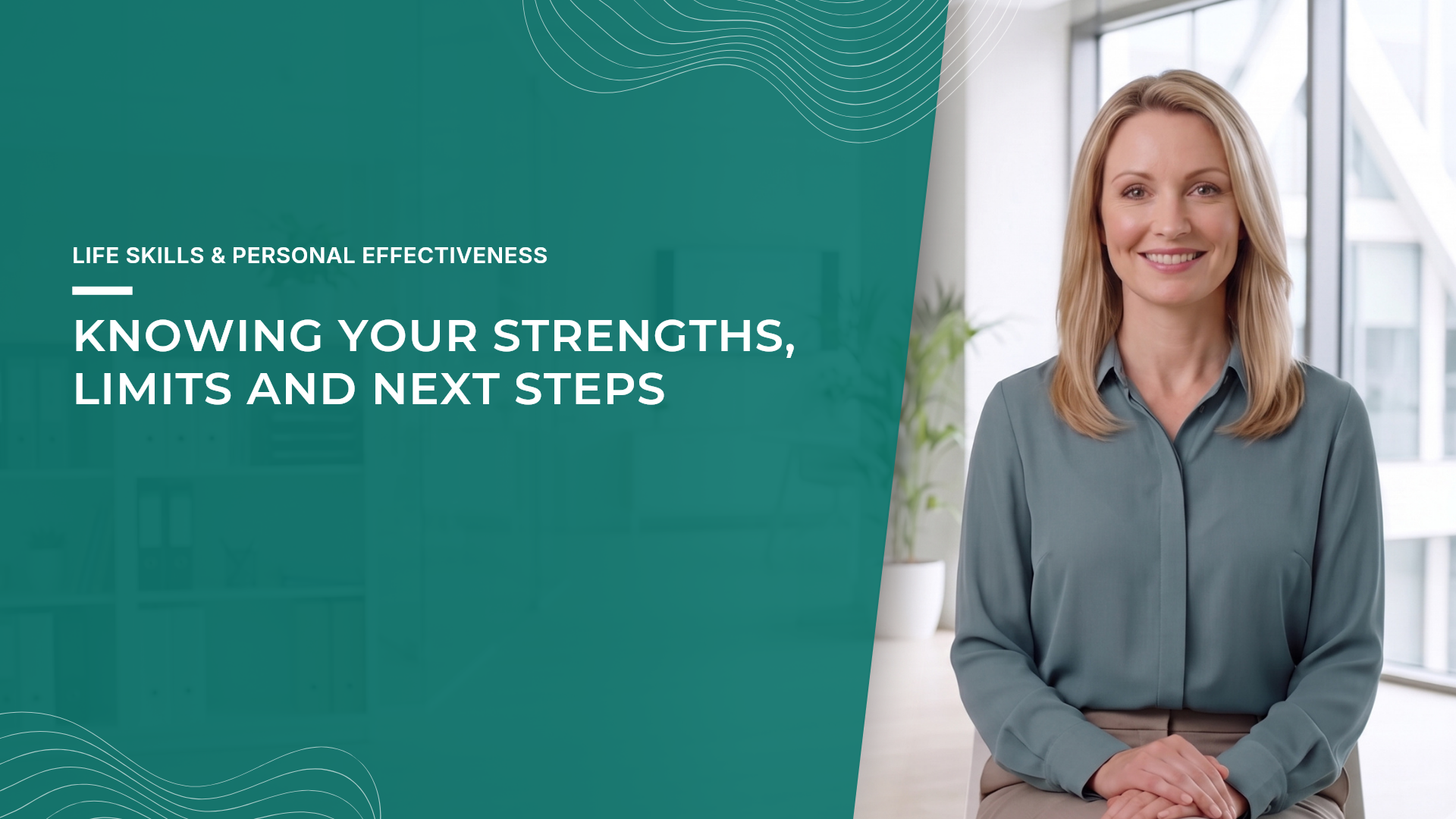
Knowing Your Strengths, Limits and Next Steps
Do you ever find yourself guessing about your strengths and limits instead of seeing them clearly? When you misread your own patterns at work, it can make decisions harder, slow your progress, and leave you feeling stuck or frustrated. Without self-awareness, even small challenges can take more effort than they should and make your next steps feel less obvious. In this course, you'll learn why self-awareness makes work easier, how guessing can lead you off track, how to use a notice-and-choose loop to assess yourself fairly, and how to keep the process honest, light, and useful.
Interactive Video
Practical Resources

Skill Practice
Certificate of Completion
— Why This Course
Benefits of Our Training
Designed by working professionals for aspiring professionals.

See Your Strengths More Clearly
Recognise the abilities and work patterns that help you succeed, so you can use your strengths more intentionally in everyday situations.

Understand Your Limits
Learn to assess your limitations honestly without being overly critical or allowing assumptions to hold back your progress.

Make Better Decisions
Build a clearer understanding of yourself so you can respond to challenges thoughtfully and choose practical next steps with confidence.
— What You'll Learn
Course Curriculum
15 Years of Experience
Learners
Assignments
Hours

— Your Instructor
The Experience Behind the Course
Understanding your strengths and limits can make work decisions easier, but it is not always simple to see your own patterns clearly. When you rely on guesses instead of honest reflection, you may overlook strengths, misjudge challenges, or feel uncertain about how to move forward.
This course introduces a practical notice-and-choose approach to help you observe your work patterns, assess yourself fairly, and decide what to do next. You'll learn to keep self-reflection honest, manageable, and useful without overthinking every situation.
— Testimonials
What Readers Are Saying
Real reviews. Real people. Real impact.

— Questions
Before you write.
A few things people ask most often.
What will I learn in this course?
You'll learn how to recognise your strengths and limits, understand your work patterns, and use self-awareness to make clearer decisions about your development.
Why is self-awareness important at work?
Self-awareness helps you understand how you approach tasks and challenges, make more informed decisions, and identify where you can improve.
How can I recognise my strengths and limits?
Pay attention to recurring work situations, notice what you handle well and what you find challenging, and reflect on these patterns without jumping to conclusions.
What is the notice-and-choose approach?
It is a simple process of noticing a situation or pattern, considering what it tells you, and choosing a useful response or next step.
How can I practise self-awareness without overthinking?
Focus on one situation at a time. Reflect honestly on what happened, identify what you can learn, and choose one small action that may help you improve.

Practical systems for modern life, performance, and wellbeing. Books, courses, and corporate programmes built from three decades of real leadership and delivery experience.