— Who It's For
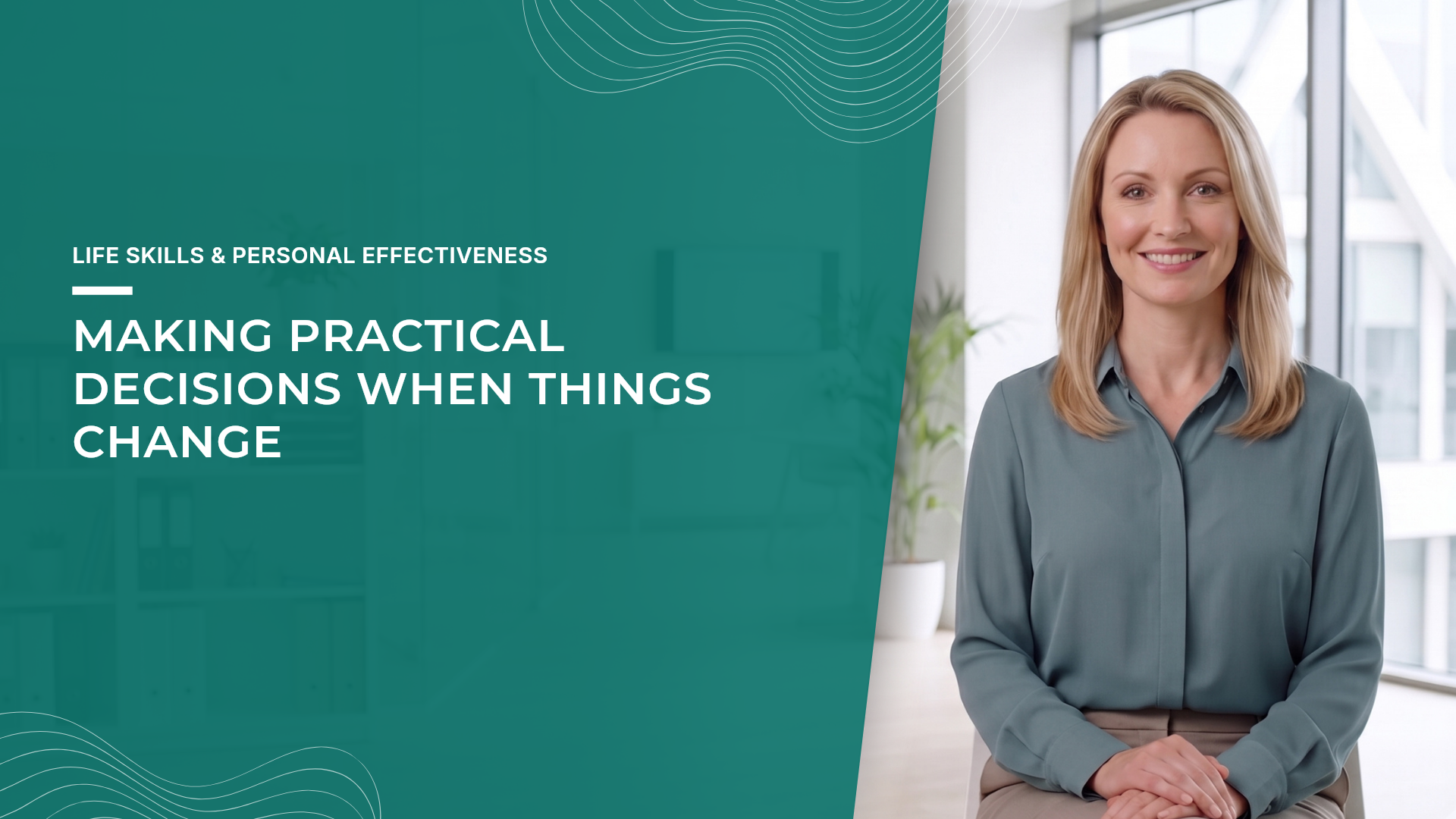
Making practical decisions when things change
Do you ever get stuck when plans shift and the next step no longer feels clear? When uncertainty slows your thinking, it can stall good work, delay action, and make everyday decisions feel harder than they need to be. Waiting for certainty before you act can keep you spinning instead of responding steadily when things change. In this course, you'll learn why uncertainty can interrupt decision-making, how the habit of waiting for certainty becomes a trap, how to use a notice-and-choose loop when plans change, and what steady decision-making looks like in practice.
Interactive Video
Practical Resources

Skill Practice
Certificate of Completion
— Why This Course
Benefits of Our Training
Designed by working professionals for aspiring professionals.

Make Decisions With Less Certainty
Learn why waiting until everything feels certain can keep you stuck, and discover a more practical way to move forward.

Break the Waiting Trap
Recognise when uncertainty is slowing your thinking and learn how to respond without needing every answer first.

Choose Your Next Step
Use a simple notice-and-choose approach to assess what has changed, make a practical choice, and keep moving.
— What You'll Learn
Course Curriculum
15 Years of Experience
Learners
Assignments
Hours
— Your Instructor
The Experience Behind the Course
This course is built around the everyday reality that plans change and decisions rarely come with complete information.
The approach focuses on helping you stay steady when uncertainty appears, recognise what has changed, and choose a practical next step instead of waiting for perfect certainty.
— Testimonials
What Readers Are Saying
Real reviews. Real people. Real impact.

— Questions
Before you write.
A few things people ask most often.
Why can uncertainty make decisions harder?
When you don't know what will happen next, it can interrupt your thinking and make even simple decisions feel more difficult than they need to be.
Why is waiting for certainty a problem?
Waiting until everything feels certain can keep you stuck. In changing situations, you often need to make a useful decision with the information available.
What is the notice-and-choose loop?
It is a simple approach that helps you notice what has changed, pause before reacting, and choose a practical response based on the situation.
How can I make better decisions when plans change?
Start by understanding what has changed, focus on what you can influence, and choose the most useful next step rather than trying to solve everything at once.
Can I use these skills in everyday situations?
Yes. The approach can be useful whenever plans shift, information is incomplete, or you need to make a practical decision without having complete certainty.

Practical systems for modern life, performance, and wellbeing. Books, courses, and corporate programmes built from three decades of real leadership and delivery experience.