— Who It's For
Pressure that’s starting to show: noticing the impact and choosing an early response
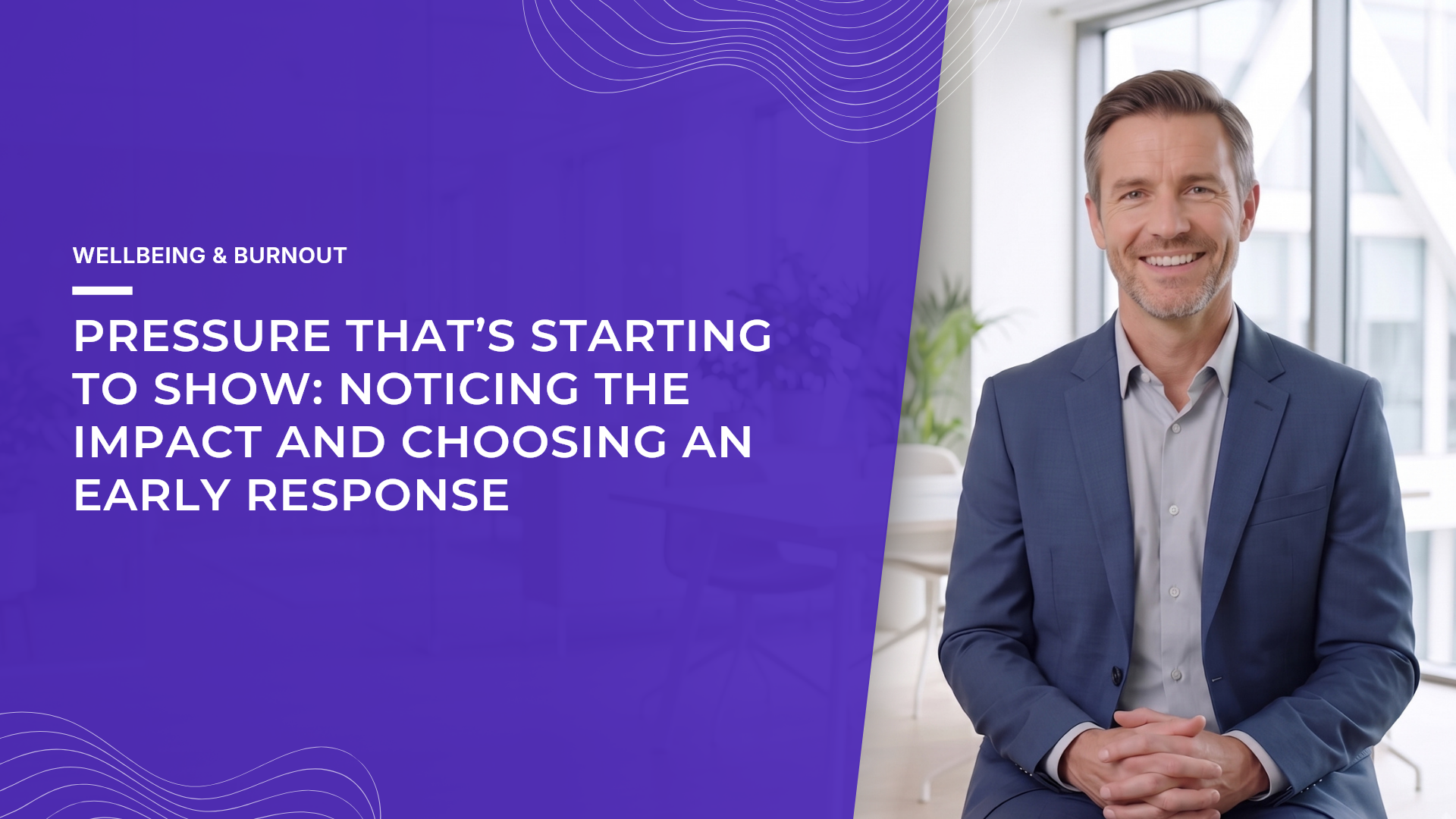
Have you noticed pressure starting to leak into the rest of you, even before anything seems “bad enough” to address? When you wait too long to respond, that pressure can affect how you function at work and make it harder to feel steady in yourself. It can be easy to fall into the trap of dismissing early signs until they become harder to ignore. In this course, you'll learn how to notice when pressure is starting to show, why waiting can make things worse, how to use a simple notice-and-choose loop, and what steadier functioning looks like.
Interactive Video
Practical Resources

Skill Practice
Certificate of Completion
— Why This Course
Benefits of Our Training
Designed by working professionals for aspiring professionals.

Recognise Early Signs
Understand how pressure can begin to show up in your behaviour, focus, and everyday work before it feels serious enough to address.

Respond Before It Builds
Learn why dismissing early signs can make things harder and how taking action sooner can help you regain a steadier approach to work.

Choose a Calmer Response
Develop a simple way to notice what is happening, consider your options, and choose a practical response instead of ignoring the pressure or reacting automatically.
— What You'll Learn
Course Curriculum
15 Years of Experience
Learners
Assignments
Hours
— Your Instructor
The Experience Behind the Course
Pressure does not always arrive as one obvious problem. Sometimes it begins to show through changes in your focus, reactions, energy, or ability to manage everyday work. When these early signs are dismissed for too long, it can become harder to feel steady and respond effectively.
This course introduces a simple notice-and-choose approach to help you recognise the impact of pressure and decide what may help. You'll learn to pay attention to early signs, respond thoughtfully, and build a more practical approach to maintaining steadier functioning at work.
— Testimonials
What Readers Are Saying
Real reviews. Real people. Real impact.

— Questions
Before you write.
A few things people ask most often.
How can I tell when pressure is starting to affect me?
You may notice changes in your focus, patience, reactions, energy, or ability to manage normal tasks. Recognising these changes early can help you decide what needs attention.
Why is it important to respond to pressure early?
Waiting until pressure becomes overwhelming can make it harder to think clearly and manage everyday responsibilities. An earlier response gives you more opportunity to address what is happening.
What is the notice-and-choose loop?
It is a simple process of noticing signs of pressure, considering what they may mean, and choosing a deliberate next step rather than automatically dismissing the signs or reacting immediately.
What can I do when I notice pressure affecting my work?
Pause and identify what has changed, consider what may be contributing to the pressure, and choose a manageable response. This might include adjusting priorities, taking a short break, or asking for support when appropriate.
How can I maintain steadier functioning at work?
Pay attention to early signs, review your needs regularly, and respond with practical actions before pressure builds further. Focus on realistic adjustments rather than expecting yourself to ignore every difficulty.

Practical systems for modern life, performance, and wellbeing. Books, courses, and corporate programmes built from three decades of real leadership and delivery experience.