— Who It's For
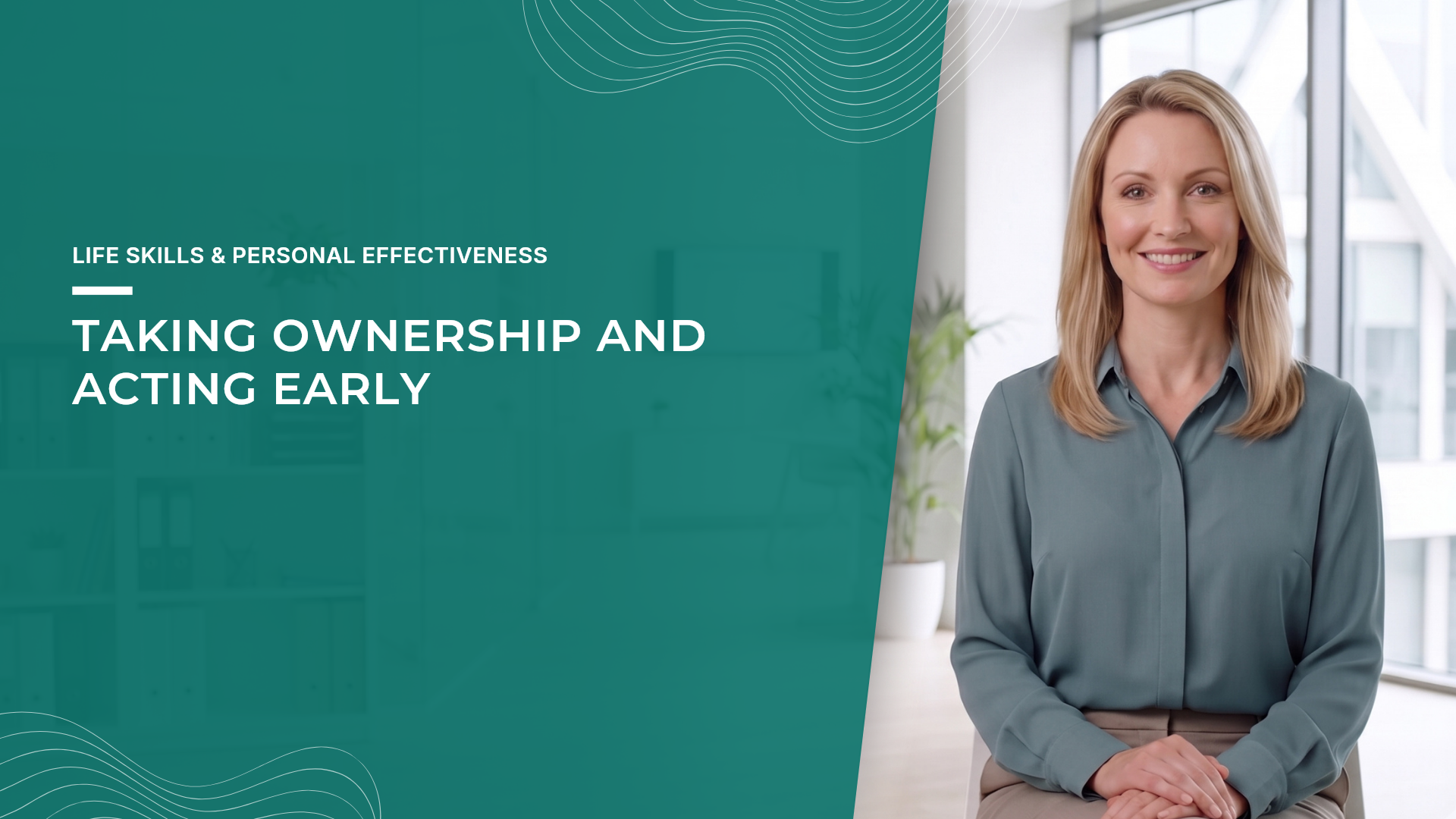
Taking ownership and acting early
Do you ever tell yourself there’s still time, only to realize a task has quietly become urgent? When follow-through slips and action gets delayed, small responsibilities can turn into bigger problems that create stress and make your work harder to manage. It can also leave you feeling reactive instead of in control of what needs your attention. In this course, you'll learn why follow-through and early action matter, how to spot the trap of assuming there’s still time, how to use a notice-and-choose loop, and how to keep your next steps small, visible, and early.
Interactive Video
Practical Resources

Skill Practice
Certificate of Completion
— Why This Course
Benefits of Our Training
Designed by working professionals for aspiring professionals.

Stay Ahead of Small Problems
Understand why delayed follow-through can turn manageable responsibilities into bigger problems, stress, and unnecessary pressure.

Break the “Still Time” Trap
Recognise the assumption that there is always more time and learn to notice when delaying action is starting to create risk.

Make Progress Visible
Use a simple notice-and-choose approach to keep next steps small, visible, and early so you can stay more in control.
— What You'll Learn
Course Curriculum
15 Years of Experience
Learners
Assignments
Hours

— Your Instructor
The Experience Behind the Course
This course is built around a common challenge at work: knowing something needs to be done but allowing it to remain until it becomes urgent.
The approach focuses on building stronger follow-through, recognising the patterns that lead to delay, and taking small, deliberate actions early enough to keep work manageable.
— Testimonials
What Readers Are Saying
Real reviews. Real people. Real impact.

— Questions
Before you write.
A few things people ask most often.
Why does delaying action create bigger problems?
Small responsibilities can become more difficult when they are left too long. Acting early gives you more time to respond before pressure builds.
What is the “there’s still time” trap?
It is the assumption that a task can safely wait because there appears to be plenty of time, even when delaying it is already creating risk.
How can I take more ownership of my work?
Start by recognising what needs your attention, choosing a clear next step, and taking action rather than waiting for the situation to become urgent.
What is the notice-and-choose loop?
It is a simple way to notice what is happening, recognise your current response, and deliberately choose the next action instead of automatically delaying it.
Why should next steps be small and visible?
Small, visible actions are easier to start and follow through on. They help prevent responsibilities from becoming vague, forgotten, or unnecessarily urgent.

Practical systems for modern life, performance, and wellbeing. Books, courses, and corporate programmes built from three decades of real leadership and delivery experience.